Mike LaVecchia

by Glenn Sakamoto

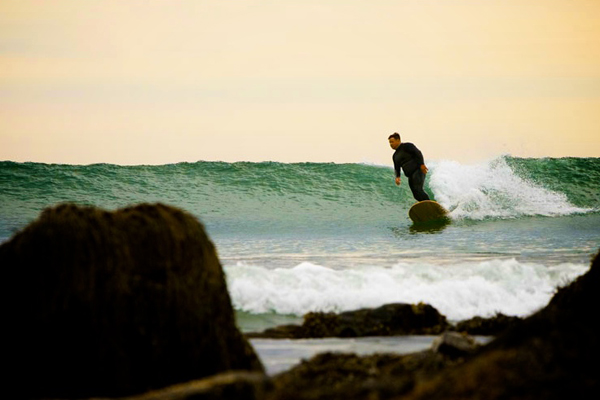
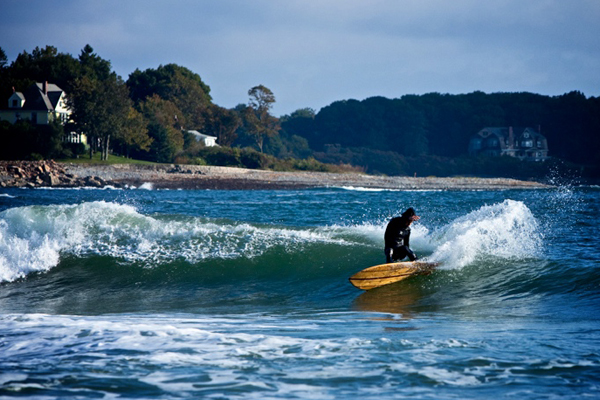
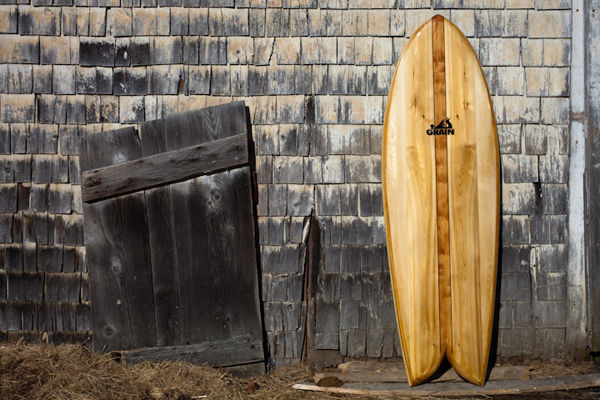
Mike LaVec­chia is a Maine surfer/shaper who is the co-founder of Grain Surf­boards. Uti­liz­ing the lat­est tech­nol­ogy, LaVec­chia cre­ates hol­low wooden boards that pos­sess both beauty and func­tion, attract­ing surfers like Kas­sia Meador and Dave Ras­tovich. We caught up with Mike to learn more.

What was life like grow­ing up in Maine?
I actu­ally grew up in New Jer­sey, and only came to Maine about five years ago by way of Ver­mont. We lived in a sub­ur­ban town not far out­side of NYC. It was a good place to grow up, lots of friends around, plenty to do. We spent most of our time either rid­ing around on BMX bikes or skat­ing lit­tle rick­ety quar­ter pipes that we built. As we got older, we spent more time in the sum­mer down at the shore, and lots of time in the win­ter in Ver­mont. So, we really learned to enjoy every sea­son for what it had to offer.

Who did you look up to and admire when you were younger?
I guess that would depend on which time of my life we’re talk­ing about. I’m sure the list would include Hulk Hogan, Craig Kelly, Tony Hawk, Bjorn Borg, Uncle Jimmy, my dad, Jake Bur­ton and John Candy.

When did you get your first surf­board?
About nine years ago. It was a used Yater Spoon.

What was the feel­ing you had when you first stood on a surf­board?
Pretty inde­scrib­able really—not so much when I first stood on a surf­board, but the first time I actu­ally felt myself pick­ing up speed and going down the line. I always had a feel­ing that once I started surf­ing, it would change the course of my life. That first wave con­firmed it.

Where did your inter­est in wood-based surf­boards come from?
I’ve been sail­ing for most of my life and, in recent years, work­ing on and around boats as a cap­tain, boat builder and sail maker. I fell in love with wooden boats early on… maybe because they were the only things I could afford. To own a wooden boat, you either have to be handy or wealthy; I knew I could learn to be handy. One of my favorite things to do was to check out boats and how they were constructed.

One day, while I was replac­ing the deck of a boat, I began think­ing about how I could take some of the dif­fer­ent tech­niques used in build­ing boats and trans­fer them to surf­boards. Boat styles, designs and con­struc­tions vary from region to region around the world. I thought, “How cool would it be to build surf­boards in dif­fer­ent regions of the world (or even just the US) using local woods and local tech­niques?” In the North­east, we had North­ern White Cedar, and what made it such a great wood for boats made it a great wood for surfboards.

What is your process when cre­at­ing your boards?
Like most boards, they start as an idea. That’s pretty much where the sim­i­lar­i­ties in the process end. We trans­late our ideas care­fully into a 3D model. In the com­puter, we’re able to tweak the shapes, send images to our cus­tomer for their input or gather other surfers and board builders around to com­ment on all the design elements.

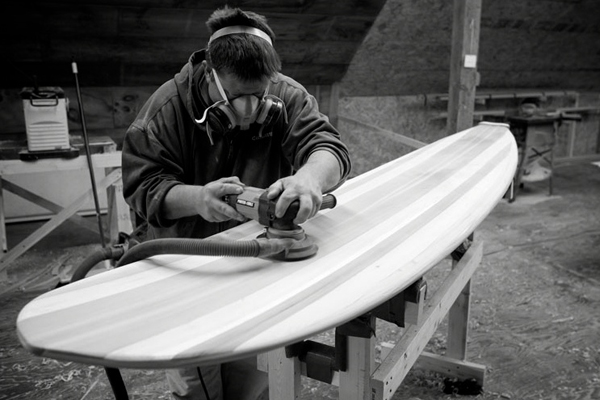
Our boards are hol­low, and build­ing them is very much like build­ing a small (or at least thin) boat. Cedar is light­weight and strong, but is heav­ier then other com­mon woods used in surf­boards, such as balsa. We build our boards around an inter­nal frame that comes from the 3D model and which defines just about the entire shape of the board, the out­line, rocker, deck, bot­tom con­tours and most of the rail shape. Start­ing from the bot­tom up, we use a com­bi­na­tion of tech­niques, many of which are derived from dif­fer­ent boat­build­ing meth­ods. A com­bi­na­tion of wide, book-matched planks go on the top and bot­tom of the board with spe­cial strips used around the rails to fill in the area where the top and bot­tom can’t meet.

We buy rough sawn lum­ber from mills here in Maine and mill out the planks, rail strips and block­ing our­selves. Each step leaves an off­cut, and that off­cut is used to cre­ate the next part down the line. The whole method cre­ates as lit­tle waste as possible—most of which goes to mulch or com­post. Com­pared to a cham­bered balsa board, where the insides are com­pletely turned to dust, our boards use about one-third of the material.

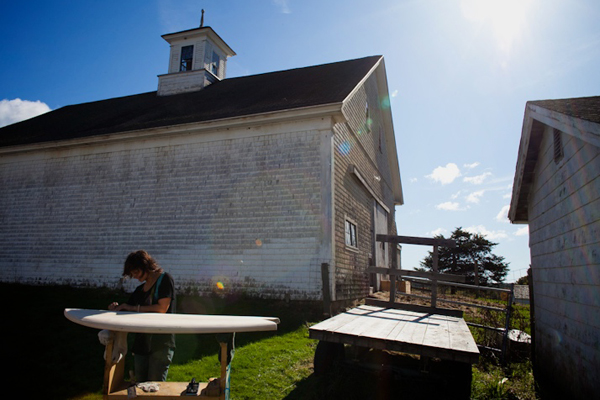
Aside from the design phase, each builder here at the shop (either John, Brad or myself) takes each board through the entire process of build­ing, shap­ing, glass­ing and pol­ish­ing. This helps to keep things inter­est­ing for all of us, plus allows us to get to know every lit­tle knot or grain change and how it might effect later steps.

Who are some of the peo­ple rid­ing your boards?
For starters, all of us at Grain ride wood boards pretty much every ses­sion, but that might be obvi­ous. Last autumn, we had Kas­sia Meador, Mikey DeTem­ple and Scotty Stop­nik try­ing out our boards at our home break here in Maine. When they weren’t surf­ing, they hung around the shop for a week build­ing their own boards— Kas­sia a 5’4” fish, Mikey a 5’0” Simmons-inspired twin fin and Scotty a 4’5” Paipo. We designed a slim lit­tle fun­shape with Layne Beach­ley spe­cially for her home break in Aus­tralia and Dave Ras­tovich has a 6’9” mini-gun that he also helped us design. He and my busi­ness part­ner, Brad, built it together on the front lawn of the Bill­abong house on the beach at Pipeline dur­ing the Triple Crown. We recently heard that Don­a­van Franken­re­iter surfed it not long ago at Sunset.

It’s funny that most of the pros that are rid­ing our boards actu­ally built them them­selves. Help­ing peo­ple build their own boards is some­thing that we’re really pumped on. So aside from every­one who is surf­ing the boards that we built here in the shop, there really are hun­dreds of peo­ple that are surf­ing Grain boards that they built with their own hands.

Of all the places you have trav­eled to, what place in par­tic­u­lar stands out? And why?
Hav­ing only been surf­ing for a rel­a­tively short time, my surf travel is lim­ited to most of the East and West Coasts, and Costa Rica (where a good friend used to live). I was lucky to have great job with Bur­ton Snow­boards back in the 80’s and 90’s, and that allowed me to travel around most of the moun­tain­ous regions of the U.S., Canada and some of Europe. I also did a bunch of trav­el­ing while work­ing around boats, up and down the water­ways of the East Coast (from Down East Maine to the Keys, the Caribbean, Gulf of Mex­ico and Panama Canal). The places that stand out the most seem to be the more rugged land­scapes where the moun­tains come down to the sea, places like the British Colum­bia and Ire­land. Life seems sim­ple, but every­thing has a purpose.

What is it that makes you such a nice per­son? What code do you live by?
Hmm, some peo­ple say I’m overly sym­pa­thetic. I’m the devil’s advo­cate. I come from a large fam­ily, have been lucky to be sur­rounded by the best friends one could have. I’m community-based. I love com­pan­ion­ship; I do best when every­one around me is hap­pi­est. I don’t know really. I’m an idea guy. I thrive on enthusiasm.

Who/what inspires you?
I’m inspired by hope and opti­mism, I guess—the idea that things con­tin­u­ally improve and evolve. I’m inspired by peo­ple who don’t set lim­its on their knowl­edge, and by my friends and broth­ers who are all so talented.

What is the great­est thing you have learned in your life?
To accept how peo­ple look at sit­u­a­tions dif­fer­ently. To be tol­er­ant of peo­ple that might not agree with your point of view.

Do you have any regrets or wish you had done some­thing dif­fer­ently?
I wish I stood up for myself more in high school. My revenge is know­ing that most of my class­mates are still liv­ing in New Jer­sey sell­ing insur­ance or ana­lyz­ing com­puter data.

What are you most proud of?
That I knew when to say “when” with each tran­si­tion in my life. That I never fol­lowed a path past the point of unhappiness.

What mean­ing does surf­ing hold for you and how has it changed your life?
Right now, surf­ing has filled a big void in my life. I’ve always been hap­pi­est when I’m close to the water. I’ve learned that it doesn’t really mat­ter what type of vehi­cle I’m on. Surf­ing has helped to con­firm that life does not need to be filled with pos­ses­sions, that the sim­pler I can exist, the hap­pier I’ll be.

What brings you the most hap­pi­ness in the world?
An egg sand­wich, cof­fee, and a view of the water.

Who are some of the peo­ple you feel are shap­ing the path for surf­ing today?
Any­one really who is think­ing out­side the box and try­ing new things: Tom and Jon Wegener, Tyler Hatzikian, Scotty Stop­nik, the Mal­loys, Richard Ken­vin and Cyrus Sut­ton are just a few that come to mind.

What is cur­rently your favorite board? Your favorite surf spot?
My 12 footer on a chest high day in front of the Nevada at Long Sands.

What’s your favorite meal?
Depends on who makes it. If I’m mak­ing it, spaghetti with meat sauce. If it’s my mom, meat­loaf with mashed pota­toes and peas. If I’m going out, maybe pad thai or a burger with fries.

What are you cur­rently lis­ten­ing to on your iPod?
My iPod mostly sits on a shelf col­lect­ing dust. You might say that tech­nol­ogy frus­trates me. If I were to put some music on, it might be Crosby Stills and Nash, The Doo­bie Broth­ers, The Shins, Nick Drake or Frank Sinatra.

What causes, projects, orga­ni­za­tions do you sup­port?
Most of the sup­port I lend has always come in the form of action. That’s what led me to work with non-profits like the Lake Cham­plain Mar­itime Museum and the Gun­dalow Company—encouraging boat­build­ing and hands-on edu­ca­tion, and teach­ing mar­itime his­tory and ecol­ogy by way of tra­di­tional sail­ing ves­sels. Through Grain Surf­boards, we’re able to pro­mote and prac­tice envi­ron­men­tal aware­ness, sus­tain­able forestry and full life­cy­cle think­ing. I look up to and admire orga­ni­za­tions as big as Sea Shep­erd Soci­ety and as small as Ver­mont Fam­ily Forests.

What are you most grate­ful for?
The expe­ri­ences we had as fam­ily grow­ing up and how those expe­ri­ences intro­duced me to the life and the friends that I now have.

What’s next for Mike LaVec­chia?
Eat­ing some lunch, answer­ing some emails and hope­fully going for a paddle.

Find out more about Mike LaVecchia’s com­pany Grain Surf­boards here. Pho­tog­ra­phy cour­tesy of Nick LaVec­chia.

Related Posts with Thumbnails

{ 8 comments… read them below or add one }

Catzel LaVecchia Bumpus May 10, 2010 at 8:15 am

Nice Interview Mike!

Reply

Mary Anne May 10, 2010 at 9:23 am

Wow and I’ve known you since you were born!!! Great article and not bad photos either.

Reply

luciano burin May 11, 2010 at 2:43 pm

loads of inspiring insights!

Reply

Felipe Siebert May 11, 2010 at 4:48 pm

Mike is a great guy … helped me in every time they wrote them asking details on the boards …

The boards of Grain and Tom W. were a source of inspiration for me when I started making my boards …

Reply

Tim Alexander May 12, 2010 at 6:09 pm

Mike LaVecchia and my brother (and I when they let me tag along) were best friends growing up… He (they) always were the nicest people in any room they occupied!

Beautiful article and great photos too!

Reply

Wayne from Australia May 13, 2010 at 3:50 pm

A few years ago I discovered Grain on the web and nearly everyday I pop into the site to see what Mike and the guys are up to. I have never met him but I really admire what he does and how he lives his life.

Reply

Tim Cahill May 15, 2010 at 7:32 am

Hey Mike, glad you are doing well, you guys make an awesome looking board.

Reply

Chris powers May 18, 2010 at 3:48 pm

Proud to have you guys in Maine. Between grain and getinthevan I feel connected to some very impressive currents in a sport that always felt so distant. Thanks.

Reply

Leave a Comment

Previous post:

Next post: