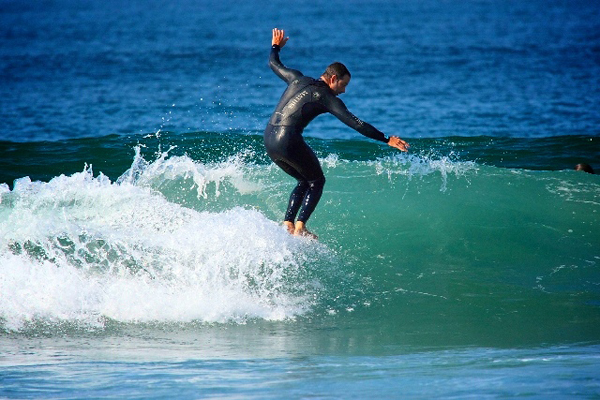
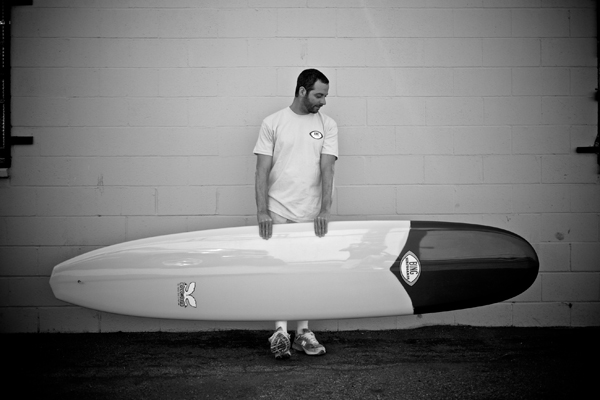
Matt Calvani

by Glenn Sakamoto

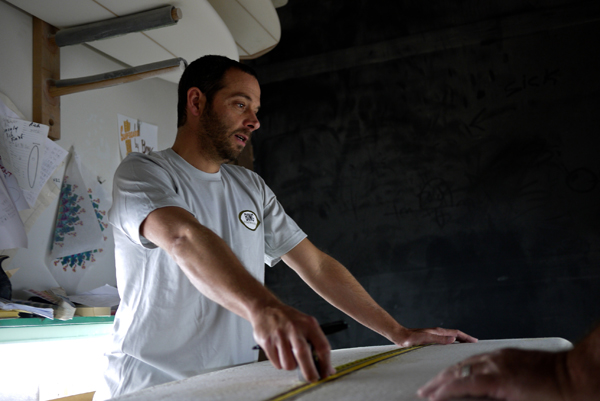
Matt Cal­vani is a Cal­i­for­nia surfer/shaper who heads up the Bing brand of surf­boards. Matt con­tin­ues the tra­di­tion of the South Bay surf­board build­ing legacy while adding his own mod­ern touch. We asked Matt to share with us his life of shap­ing.

What was life like grow­ing up?
I grew up in rural Mass­a­chu­setts near the ocean. My mom was a house­wife and my dad had a busi­ness restor­ing old antique lighting—a self-taught crafts­man. My par­ents got divorced when I was eight. I lived with my mom. She was truly remark­able and went back to school at 37. She got a B.A. in inte­rior design. Then, it was off to Cal­i­for­nia in 1984. I was in the mid­dle of eighth grade and we lived two blocks from the ocean in Her­mosa Beach. I was stoked because I always loved the ocean and got into surf­ing right away.

Tell us how you got started shap­ing
I became a typ­i­cal surf shop grem­mie and got to know a local shaper by the name of Tom Stan­ton. I started hang­ing out at his shap­ing room on 26th Street and became totally fas­ci­nated with the craft. I think he got sick of all my ques­tions and finally gave me job help­ing him air­brush surfboards.

They became my sec­ond fam­ily. Tom was a per­fec­tion­ist and a mas­ter crafts­man who gave me a solid foun­da­tion to go out on my own. Like most fledg­ling shapers, I started in my garage shap­ing for local South Bay surfers. After get­ting a cou­ple hun­dred boards under my belt, I rented a small unit next door to three of the main his­tor­i­cal South Bay fac­to­ries of the 60’s—Bing, Greg Noll and Rick. Some of the leg­ends were still around shap­ing surf­boards (like Hap Jacobs, Phil Becker and Lance Carson).

This was when I learned the old school art of shap­ing and long­board design. Mean­while, a rev­o­lu­tion in design was going on with the short­boards. Boards went from bulky flat rock­ers to extreme rock­ers, foils and ultra nar­row out­lines. Al Mer­rick was lead­ing the rev­o­lu­tion and Shore­line Glass­ing, in Her­mosa Beach, was glass­ing them. I was air­brush­ing a lot of the Chan­nel Islands back then. It was an excit­ing time, and I took com­plete advan­tage of the entire goings on. Den­nis Jarvis of Spy­der surf­boards was tap­ping into Merrick’s designs and had a super­star surf team. I ended up with a job “rough-shaping” for Spy­der and part-time for Hap Jacobs. This was also when the first crude shapes were com­ing off the KKL shap­ing machine and I mean crude.

Mer­rick was one of the first to jump on the tech­nol­ogy and Den­nis was always right behind. With the machine com­ing into the pic­ture and the need for “rough shap­ing” not as promi­nent, I decided to go with a job offer at Becker Surf­boards. This job was a trial of nerves. Phil Becker told me I had to work up to 11 shaped boards a day by hand or they would hire another shaper and I would lose half my income. I made the plunge but… man… that was the hard­est year of my whole career. After seven years of that—I was done.

Tell us why you chose the Bing brand as your busi­ness.
I was already shap­ing sin­gle fin designs for Rick Surf­boards with my friend Jeff Stoner and for Lance Car­son when I ran into Bing in Baja Mex­ico on a ran­dom surf trip with some bud­dies. I told him I was build­ing Ricks and owed him some roy­alty money for a few Bing & Rick boards Jeff and I had built. Then, I offered to shape his boards if he ever needed any­one to do it. As luck would have it, his good friend and one of his orig­i­nal shapers, Mike Eaton, who was the cur­rent licensee for Bing Surf­boards, hap­pily relin­quished the name since he was quickly approach­ing retire­ment him­self. This couldn’t have hap­pened at a bet­ter time for me. With Chan­nel Islands and sev­eral other com­pa­nies dom­i­nat­ing the short­board niche, I quickly real­ized that if I con­tin­ued down the path I was on, I would strug­gle for a long time to carve out a place for myself in this com­pet­i­tive mar­ket. Bing gave me just the oppor­tu­nity that I needed to move for­ward in my career as a shaper.

I always knew that I wanted to take Bing Surf­boards in the direc­tion of “a core high-end brand”. The Bing brand has always had a mys­tique about it—from its asso­ci­a­tion with David Nuuhiwa and Dick Brewer to the Camp­bell Broth­ers bonzers—that has made it a part of surf­ing his­tory. I started intro­duc­ing and refin­ing those amaz­ing his­tor­i­cal shapes. My goal was to cap­ture the essence of those eras in surf­board his­tory while adding the knowl­edge I had learned in my own journey.

How come there isn’t a Matt Cal­vani brand?
I strongly believe in a “brand,” a com­pany that goes far beyond its orig­i­nal founders. I don’t want this com­pany to be about me. It’s more about car­ry­ing on the Bing legacy, set­ting my ego aside and focus­ing on build­ing the brand to the extent that I don’t even sign the boards. In the 60’s, Bing employed a lot of tal­ented shapers, but in the end it was the brand that stood the test of time. Take the Ford Mus­tang, for exam­ple. Not too many peo­ple know who designed that car, but peo­ple know that it was a qual­ity prod­uct because of the Ford brand name.

Who inspires you?
Pio­neer shapers Matt Kivlin, Joe Quigg and Bob Sim­mons, who inspired Dale Velzy and Hap Jacobs in the balsa era. That led to the first surf shops and surf brands like Bing, Rick and Jacobs. This, in turn, made way for the shapers I worked with, like Dan Ben­dick­sen, Den­nis Jarvis and Phil Becker. They all, directly or indi­rectly, inspired me or taught me what I know today.

Do you shape your boards by hand or do you use a machine?
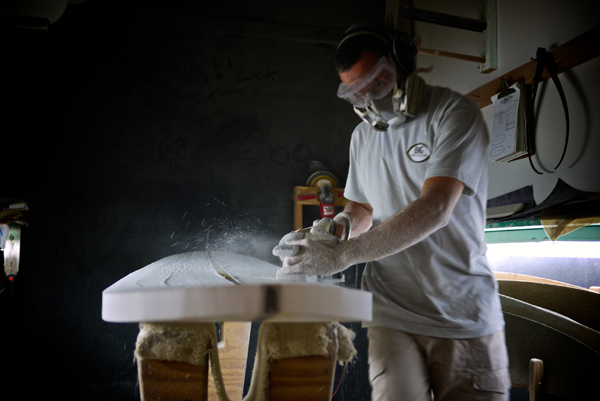
I guess the eas­i­est answer is BOTH. I started shap­ing boards before the machine was really even rel­e­vant, grind­ing my way through shape after shape at Becker. When the com­puter came along, I began to see its value as a tool just like my Skil or Rock­well. When I opened my own surf­board shap­ing and glass fac­tory, the machine really became cru­cial to my pro­duc­tion because in order to keep nine guys fully employed and busy, it takes vol­ume. I just wasn’t able to man­age a busi­ness, employ­ees and shape that many boards a day by hand. I learned to use the tech­nolo­gies to help in the pro­duc­tion, but hand-shaping is equally as impor­tant and crit­i­cal to my business.

With each design idea and con­cept for a cer­tain board model that has spe­cific per­for­mance goals, I typ­i­cally go through an R&D phase. I hand-shape iter­a­tions (some­times 10 to 20) of a new model until I arrive at the one that works and has the aes­thet­ics that I envi­sioned. Then, that final shape is scanned and pro­grammed to be milled on the CNC machine. The out­come is that I can main­tain the qual­ity and con­sis­tency of every board and have the abil­ity to scale the mas­ter shape’s dimen­sions by length, width and thickness.

What is your favorite board? And favorite surf spot?
I have a lot of go-to boards for cer­tain con­di­tions that I know will work, but most of the time I’m try­ing new con­cepts and test­ing them. In that regard, I really don’t have a favorite board.

La Sal­a­dita, Mex­ico for long­boards. It’s a left and when the swell and size is right, it can break just like Mal­ibu. For short­boards, it would have to be Tavarua— Cloud­break and Restau­rants. Both are places that I know the wave will be near per­fect and always break the same year after year.

What do you love about surf­ing?
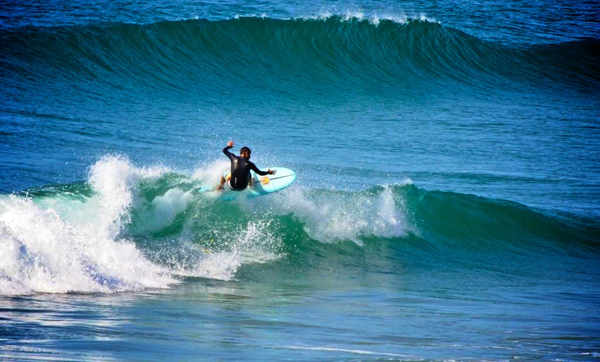
When surf­ing, the two favorite places I like to be are on the nose or in the tube.

What is the great­est thing you have learned in your life?
The great­est les­son I have learned is how to man­age my life, rela­tion­ships and finances so that every­thing is in balance.

What are you most proud of?
That I believed in myself and per­se­vered. In high school, my career coun­selor kept telling me I needed to go to sum­mer school or I wouldn’t grad­u­ate high school. He said, “What are you going to do?” I told him I was going to make surf­boards. He told me, “You can’t do that!” Every­one told me I couldn’t make a liv­ing mak­ing surf­boards. I some­times regret not going to col­lege, and I think I got pretty lucky. I usu­ally tell kids that have an inter­est in shap­ing to go to school first to have some­thing to fall back on.

What brings you the most hap­pi­ness in the world?
When my life is in bal­ance. When my guys have work. When Mar­garet and I are get­ting along well and every­one around me is healthy. I don’t con­sider myself mate­ri­al­is­tic, so I don’t need a lot of unnec­es­sary things. I’m grate­ful for what I’ve got.

What’s your favorite meal?
Grow­ing up in an Ital­ian house­hold, it’s pretty much any­thing Ital­ian. The runner-up is sushi.

What kind of music do you lis­ten to?
Any­thing that sounds good or inspires me.

What are you most grate­ful for?
My fam­ily and friends. And for Mar­garet Yao, who is the best thing that ever hap­pened to me and who will become my wife this fall.

What’s next for Matt Cal­vani?
I’m going to expand the Bing line of alter­na­tive short­boards with my team rider, Chris Del Moro. He’s a super tal­ented surfer and per­son, and it’s one of those shaper and surfer rela­tion­ships that hap­pens so rarely. So we are look­ing for­ward to the results from his involve­ment and the impact it will have on the Bing brand.

Find out more about Matt Cal­vani and Bing Surf­boards here. Matt Cal­vani is also shaper for Jacobs Surf­boards.

Related Posts with Thumbnails

{ 1 comment… read it below or add one }

Tim Jones June 7, 2010 at 9:18 pm

Matt used to shape boards for a Oregon company in the nineties called Raven. They were great and there’s still a lot of them around up here. I wish i still had mine.

Reply

Leave a Comment

Previous post:

Next post: